Skip to content
Console

ExpTech Studio

Real-time earthquake monitoring for Taiwan

ExpTech Studio designs seismometers, builds apps and desktop software, and runs a public API that delivers earthquake data as it happens.

TREM-net
200+ stations in Taiwan
Station intensity
Updated every second
Interfaces
HTTP · SSE
Station intensityIllustration

Intensity

CWA scale

  1. 7
  2. 6強
  3. 6弱
  4. 5強
  5. 5弱
  6. 4
  7. 3
  8. 2
  9. 1
  10. 0

弱 lower · 強 upper

What we do

ExpTech Studio is a team with a mix of skills. We focus on real-time earthquake monitoring in Taiwan and use seismic data and visualization to provide earthquake information and data services.

  • Real-time monitoring

    Since 2022 we have built TREM-net, the TREM seismic network, with 200+ stations covering every county and city in Taiwan. Seismometers we design ourselves record ground motion on three axes, and intensity at each station updates every second.

  • Earthquake early warning

    We relay earthquake early warnings from Taiwan's Central Weather Administration (CWA). Seismic waves take seconds to tens of seconds to reach you, and the alert goes out in that window. Our TREM system also computes its own warnings, TREM EEW, from TREM-net observations. TREM EEW is not official information: under the Meteorological Act it is provided only to specific users and is not issued to the general public. The CWA's releases always prevail.

  • Open data and API

    Earthquake reports and real-time station data are available over an HTTP API and SSE real-time streams. Developers can connect directly and build their own tools.

Products

A disaster-information app, desktop software and seismometers, all designed and built in-house.

Product docs
Mobile app
  • Android
  • iOS

DPIP

Disaster Prevention Information Platform

Weather and earthquakes, in your pocket

From CWA earthquake early warnings and live rainfall to weather and hazard maps, DPIP brings the information that matters into one mobile app, so you can see what is changing around you sooner.

  • No ads
  • Battery-friendly
  • Real-time alerts
Real-time alerts
Alerts from several sources, pushed to you the moment an earthquake happens.
Earthquake info
Earthquake reports, live stations and seismic waves as they spread.
Hazard maps
Live rainfall, radar, satellite and typhoon information in one place.
24-hour forecast
The latest forecast, so you can plan your day.
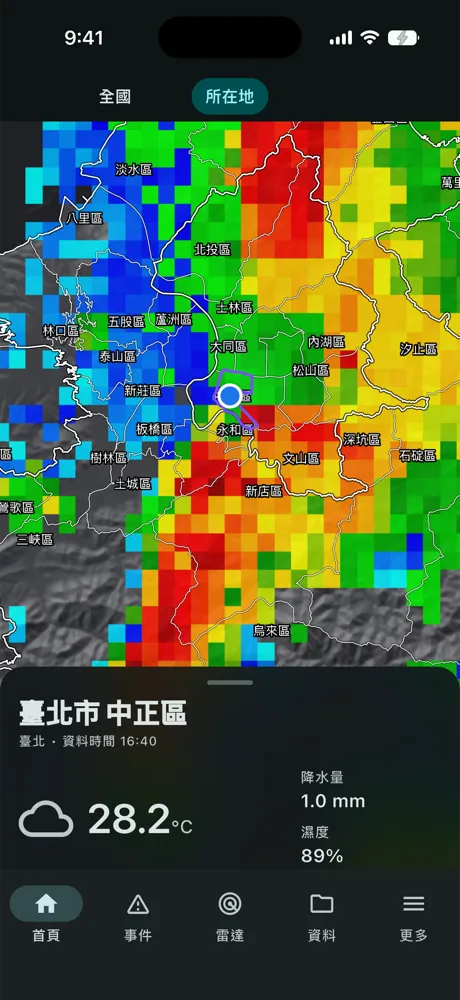
DPIP home screen: a radar map and current weather for Zhongzheng District, Taipei
Seismometer
  • ESP32
  • Wi-Fi 2.4 GHz
  • USB Type-C

ES Series Seismometers

A low-cost, high-sensitivity three-axis MEMS seismometer. It connects over Wi-Fi with NTP time sync and plugs into a computer over USB-C. Made for teaching, research, and seismic networks.

Anyone can buy one and join TREM-net.

ES-Net specifications

Sample rate
50 SPS
Resolution
16-bit
Range
±2 g
Bandwidth
DC–25 Hz
Weight
36.8 g
NTP time error
±10 ms
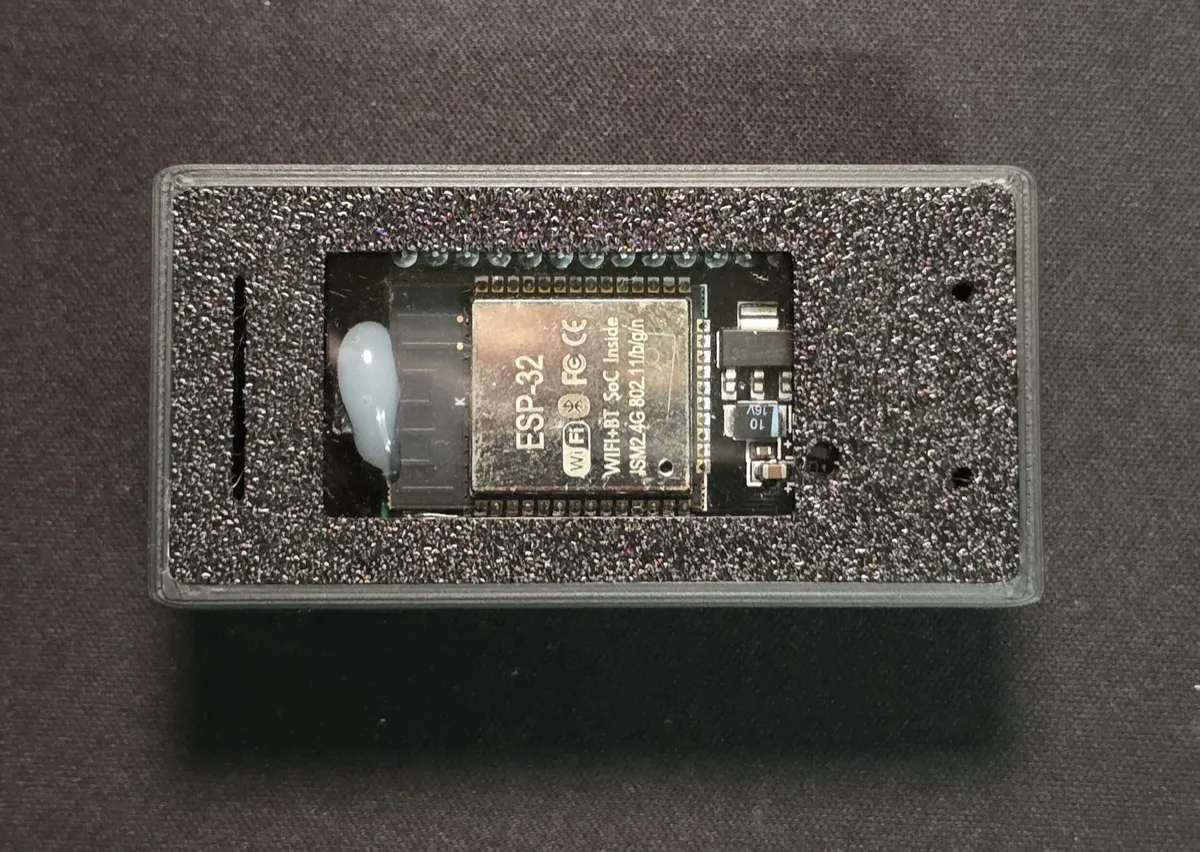
The ES-Net seismometer: a black case with the ESP-32 module visible through an opening
ES-NetBasicThree-axis MEMS accelerometer; no display or buzzer7 × 3.5 × 2.4 cm
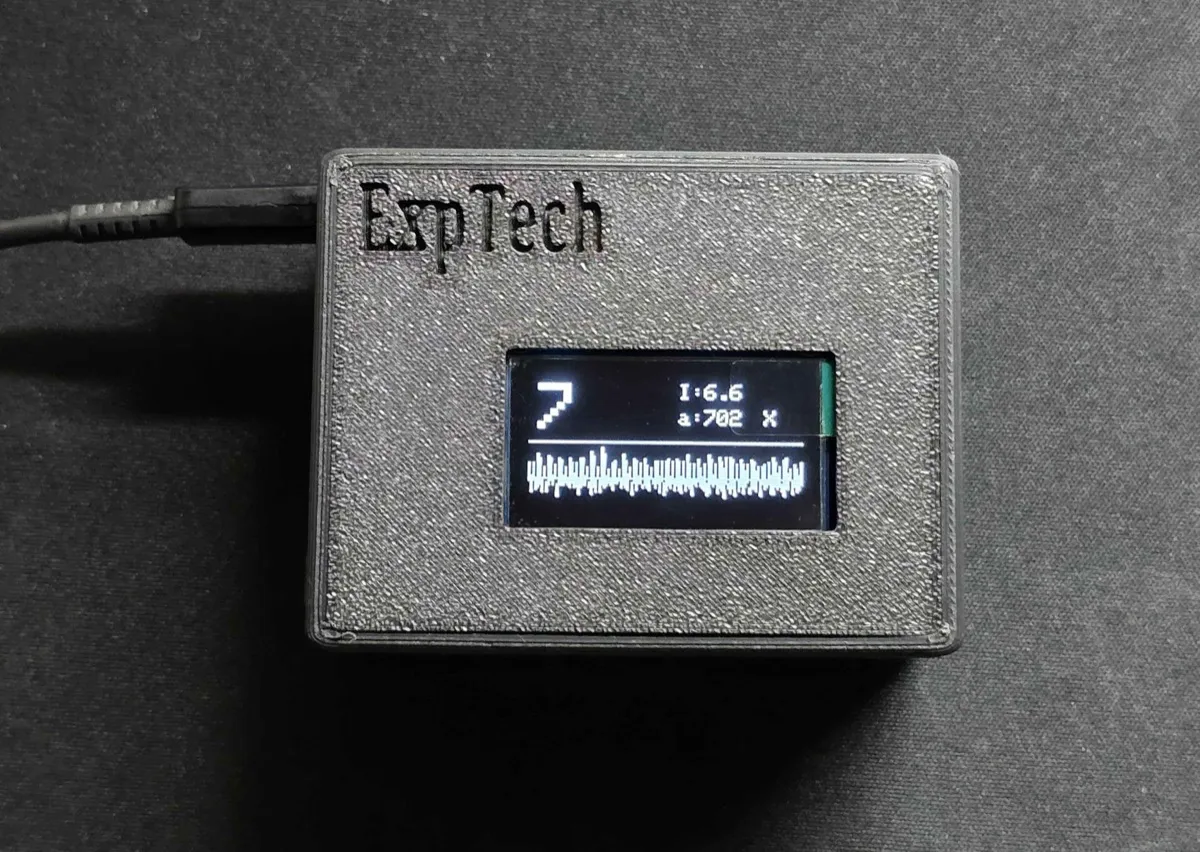
The ES-Pro seismometer: a black ExpTech case with an OLED screen showing intensity and a waveform
ES-ProWith displayBuilt-in OLED display and buzzer; shows intensity and waveforms live7 × 5.45 × 3.4 cm
Desktop app
  • Windows
  • macOS
  • Linux
  • Web

TREM-Lite

A desktop earthquake monitor. It shows live intensity, CWA earthquake early warnings, and earthquake reports, and keeps running in the background. A web version needs no install.

  • Voice announcements, system notifications, picture-in-picture and a tray icon
  • Open source (AGPL-3.0)
Companion software for ES
  • Windows
  • macOS
  • Linux

QuakeWatch-Pro

Companion software for ES series seismometers. Connect over USB-C and see the waveforms live.

Geo-redundancy

Every station sends its data to two core sites at the same time: Tainan in Taiwan and Tokyo in Japan. Each site computes on its own, so if one goes down, the other keeps producing real-time intensity.

Dual uplink
Each station is connected to Tainan (primary link) and Tokyo (backup link) at once. Both sites receive the data; nothing waits for a failure to switch over.
Independent computing
Both core sites compute real-time intensity and waveforms on their own, then sync across sites with de-duplication so no reading is processed twice.
Automatic failover
The database replicates synchronously and promotes the standby automatically if the primary fails. A three-site quorum in Tainan, Tokyo and Taipei elects the primary.
Two entry points
Developers reach the API and SSE streams through load balancers in Taipei and Kaohsiung.

Geo-redundancy covers real-time earthquake data (stations, intensity, waveforms, earthquake reports). Weather data and radar, satellite and wind tiles are currently served from the Tainan site only.

See the full architecture
JapanTainanKaohsiungTaipeiTokyoStationPrimary linkBackup linkSync + de-dup
  • Core site
  • Load balancer
  • Quorum member
  • Station

ExpTech API

The ExpTech API serves earthquake reports and real-time station (RTS) data over HTTP and SSE real-time streams. It runs on several servers, and you can choose which node to connect to. Endpoints, data formats, and usage rules are in the API docs. All data requires attribution, and some of it (such as TREM-net data) is for non-commercial use only.

GET/api/v2/eq/reportFetch earthquake reports
cURL
curl https://api.core.exptech.dev/api/v2/eq/report
JavaScript
const res = await fetch(
  "https://api.core.exptech.dev/api/v2/eq/report",
);
const data = await res.json();

Nodes

  • Autoapi.core.exptech.devAssigned by DNS
  • TNN-1api.core-tnn1.exptech.dev
  • TYO-1api.core-tyo1.exptech.dev

For official earthquake and weather information, refer to the Central Weather Administration (CWA).